Bus Network Topology
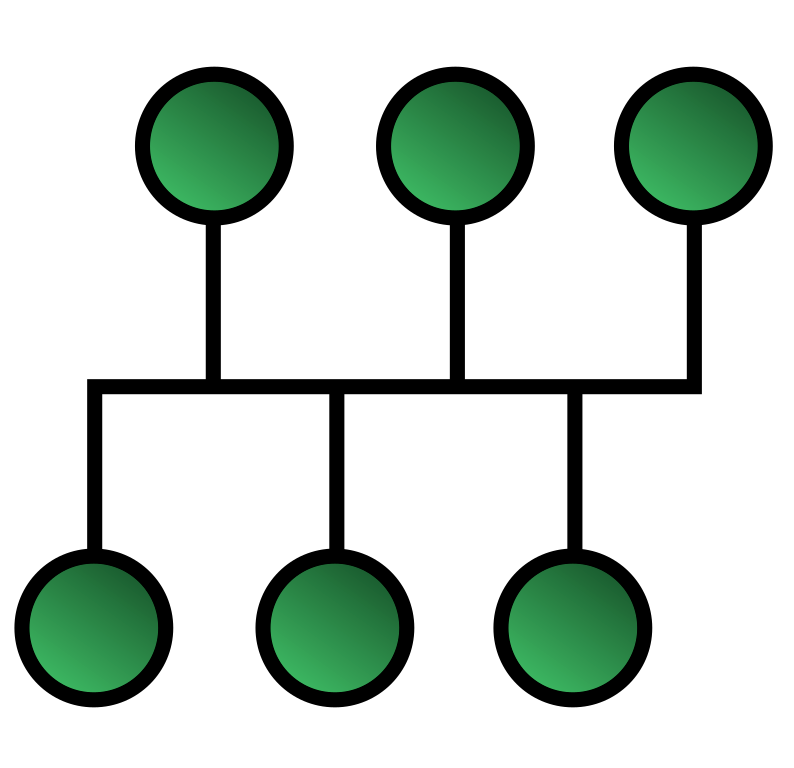
|
A bus topology is like a single road where all the houses (computers) are connected. In this setup, a single cable, called the "bus," runs through all the computers. Each computer taps into this cable to send and receive data. It's like cars on a road; they share the same path.
A bus topology is a fundamental Network Topology in which all devices are connected to a single communication channel, known as a "bus." This bus serves as a shared communication medium through which data is transmitted. Devices in a bus topology are typically connected using a drop cable or connector to tap into the main bus.
In Bus Topology…
-
it used to be popular for Ethernet LANs
-
multipoint vs point-to-point
-
one long cable acts as a backbone to link all the devices in a network
-
nodes are connected to the bus cable by drop lines and taps
Drop Line: a connection running between the device and the main cable
Tap: a connector that either splices into the main cable or punctures the sheathing of a cable to create a contact with the metallic core
Advantages:
-
Ease of installation
-
Less cabling than mesh and star topologies
Disadvantages:
-
Limited number of taps and distance between taps
-
Difficult reconnection and fault isolation
-
Difficult to add new devices (designed for optimal efficiency during installation)
-
Signal reflection at the taps can cause degradation in quality (controlled by number of taps and spacing between them)
-
Fault or break in the bus cable stops all transmission (even between devices on the same side of the problem)